You go to the gym three times a week. You show up, you do the work, you're consistent — you even have the gym bag by the door to prove it. And yet something doesn't add up. You're tired in a way that sleep doesn't fix. You catch every cold that goes around. Your mood is flat despite all that "endorphin release" you were promised. Your body looks better in certain areas but feels somehow worse as a whole. You have a stiff neck that never fully goes away. A shoulder that clicks. A knee that complains on stairs. A lower back that just won't loosen up. Before you blame your willpower, your diet or your age — consider this: the place where you're going to get healthy might be working against you in ways nobody ever told you about.
Sound familiar? Good. Keep reading.
« The gym is a place where we go to perform health. The outdoors is a place where health actually happens. There is a difference — and your body knows it. »
— Patrik · iMove-Fit
The Place You Go to Get Healthy Might Be Working Against You
Just to be clear — I love exercise. I've built my entire life around it. This is not that article where someone tells you movement is overrated. It isn't. Regular physical activity is probably the closest thing we have to a magic pill.
What I'm questioning is the box. The sealed, artificially lit, rubber-floored, machine-filled box we decided should be where exercise happens. And the very specific type of movement that box produces.
The modern gym appeared roughly 50 years ago. Before that, humans moved — constantly, varied, outdoors, in social groups, carrying things, climbing things, throwing things, walking long distances over uneven terrain. Movement was woven into the fabric of daily life. Today, we sit for 10 to 12 hours, drive to a sealed box, perform isolated movements on guided machines for 45 minutes, drive home, and call it exercise. The activity itself is well-intentioned. The context is biologically absurd.
Six reasons. And honestly — once you see them, you can't unsee them.
Reason 1 — The Light Environment
A typical gym is lit by LED panels at 400 to 600 lux. The air is recycled. There are no windows, or windows with glass that filters out the biologically active wavelengths. You walk in, train hard, walk out. This sounds like a minor detail. It is not.
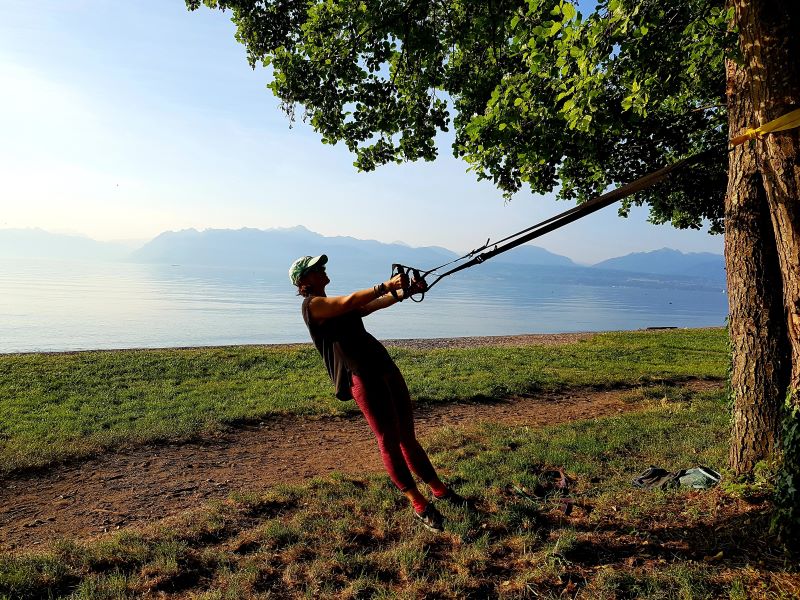
The gym alternative. Natural light, varied terrain, open sky. Every biological system in the body responds differently here than under fluorescent tubes.
Your body — every cell of it — is calibrated to light. When you exercise outdoors, your suprachiasmatic nucleus (SCN — your master body clock) knows exactly what time it is. Your cortisol curve is anchored. Your mitochondria are running their cleaning cycle on near-infrared light (NIR — the invisible warmth of sunlight). Your eyes are receiving the full spectrum of signals they need to schedule your hormones, your immune response, your recovery.
In the gym, none of that happens. You're performing a massive hormonal and metabolic event in a light environment that your biology classifies as "a dim cave at midnight." The signals that should coordinate your recovery, your sleep that night, your cortisol rhythm the next morning — none of them are there.
And the floor. Flat, hard, rubber. Perfectly level, perfectly uniform, perfectly dead. Your feet — which contain a quarter of all the bones in the human skeleton and are among the most complex sensory organs in your body — receive zero varied input. No grass, no soil, no pebbles, no incline, no texture. The 200,000 sensory nerve endings in your soles that evolved to read terrain and feed proprioceptive information to your brain are essentially switched off. You are training in sensory deprivation and calling it fitness. Two hundred thousand nerve endings in your feet — switched off, bored, atrophying quietly.
Think about this honestly
When did you last train outdoors — not on a treadmill facing a window, but actually outside, under open sky, with natural light on your skin and real ground under your feet? And how did you feel afterwards compared to a typical gym session? Most people, when they think about it, already know the answer. The body knows. We just stopped listening.
Reason 2 — Machines Train Muscles. Life Requires a Functional Body.
Here is something the fitness industry prefers not to say out loud — and understandably so, given the investment in chrome and rubber flooring: most gym machines are designed to be used sitting down.

The modern gym in one image. Seated, isolated, connected to a screen. Your body came here to move. This is what it got.
The chest press — seated. The lat pulldown — seated. The leg press — seated. The shoulder press — seated. The rowing machine — seated. The bike — seated. You drive to the gym seated. You sit at a desk all day. You drive home seated. And in between, you go to a place specifically designed for "fitness" and spend 40 minutes doing more sitting. Your chair is very proud of you. Your hip flexors, less so. And in between, you go to a place specifically designed for "fitness" and spend 40 minutes doing more sitting.
But the problem goes deeper than the sitting itself. The guided machine was invented to isolate a specific muscle and load it in a controlled, predictable, single-plane range of motion. This has its place in post-surgical rehabilitation. As the primary movement diet for a healthy human being, it is fundamentally wrong.
The glute amnesia epidemic — and the cascade of damage it causes
In over 20 years of hands-on coaching and biomechanical assessment, I have tested hundreds of clients. The finding is remarkably consistent — and slightly depressing. The finding that never stops shocking me: approximately 97% of people I assess have dormant, weak or frankly amnesiac glutes. That includes fit people. Sporty people. People who go to the gym four times a week. Yes, probably you. Their gluteal muscles — the most powerful in the human body, designed to be the primary engine of walking, running, jumping, climbing, carrying — have essentially forgotten how to fire properly. Years of sitting have switched them off. And the gym, for most people, has done nothing to switch them back on.
Why does this matter so much? Because when the primary engine is asleep, the body compensates. It recruits secondary muscles to do work they were never designed for. And this compensation cascade is at the root of a remarkable number of the chronic pains and injuries that plague gym-going, apparently fit people.
The compensation cascade — from dormant glutes to chronic pain
Weak gluteus medius (the stabiliser on the side of your hip) → piriformis overactivation → piriformis syndrome → sciatic nerve compression → sciatica. Also: lateral knee pain — iliotibial band syndrome (ITB syndrome), also known as "runner's knee" — the bane of half the running community, and almost always rooted in the hip, not the knee.
Weak gluteus maximus (the main driver) → knee valgus (knees collapsing inward) → patellofemoral syndrome (anterior knee pain) → patellar tendinopathy. In the longer term: lower back overload, lumbar instability and, eventually, spinal arthrosis.
Both patterns, left uncorrected for years, lead to chronic lower back pain — the number one reason people stop exercising altogether. The origin was not the back. It was two muscles in the buttock that stopped working. Nobody told them.
So where does a typical gym programme address all of this? Well. It trains the quadriceps (leg press, leg extension), the hamstrings (leg curl), the calves (calf raises) — all in isolation, all in a fixed plane, all seated or lying. The glutes get a brief nod in the squat rack, if the technique is correct (it usually isn't) and if the depth is adequate (it usually isn't). The deep hip stabilisers, the hip external rotators, the posterior chain as an integrated system — barely touched.
Training the mirror muscles makes everything worse
There is another pattern I see consistently — and if you've ever spent time in a gym, you've seen it too. People train the muscles they can see in the mirror. Chest on Monday. Chest on Wednesday. Chest on Friday, just to be safe. The back? Somewhere in there. The glutes? The what? Chest, biceps, anterior shoulders, upper traps, rectus abdominis (the "six-pack" — the most overworked and least functional part of the core). Here is the cruel irony. These are already the muscles that are shortened and overactive from a life spent sitting at a desk, driving, and looking at screens. Training them further shortens them further. Posture deteriorates. The shoulders round further. The head migrates forward. The chest closes down. The thoracic spine stiffens into a curve that would make a question mark jealous.
And here's the part that surprises people: a closed chest means a compressed diaphragm. The diaphragm — your primary breathing muscle — cannot fully descend. You breathe shallow. Upper chest only. Less oxygen per breath. Less CO2 exchange. The nervous system reads shallow breathing as a threat signal and keeps cortisol slightly elevated — all day, all night, even during sleep. Less oxygen means less energy, less mental clarity, less recovery, less vitality. All because someone spent three years doing chest press with rounded shoulders instead of opening what sitting had already closed.
Take a breath right now. A deep one. Did your chest rise, or your belly? If it was your chest — that's shallow breathing. And that's probably not new.
Meanwhile the muscles that are lengthened and underactive from the same desk life — the deep neck flexors, the lower trapezius, the serratus anterior, the posterior rotator cuff, the deep hip flexors, the glutes — get little or no attention. The imbalance grows. The posture worsens. The stiff neck stays stiff. The shoulder keeps clicking. And another set of chest presses is added to the programme.
Repetitive isolated movement destroys the fascial system
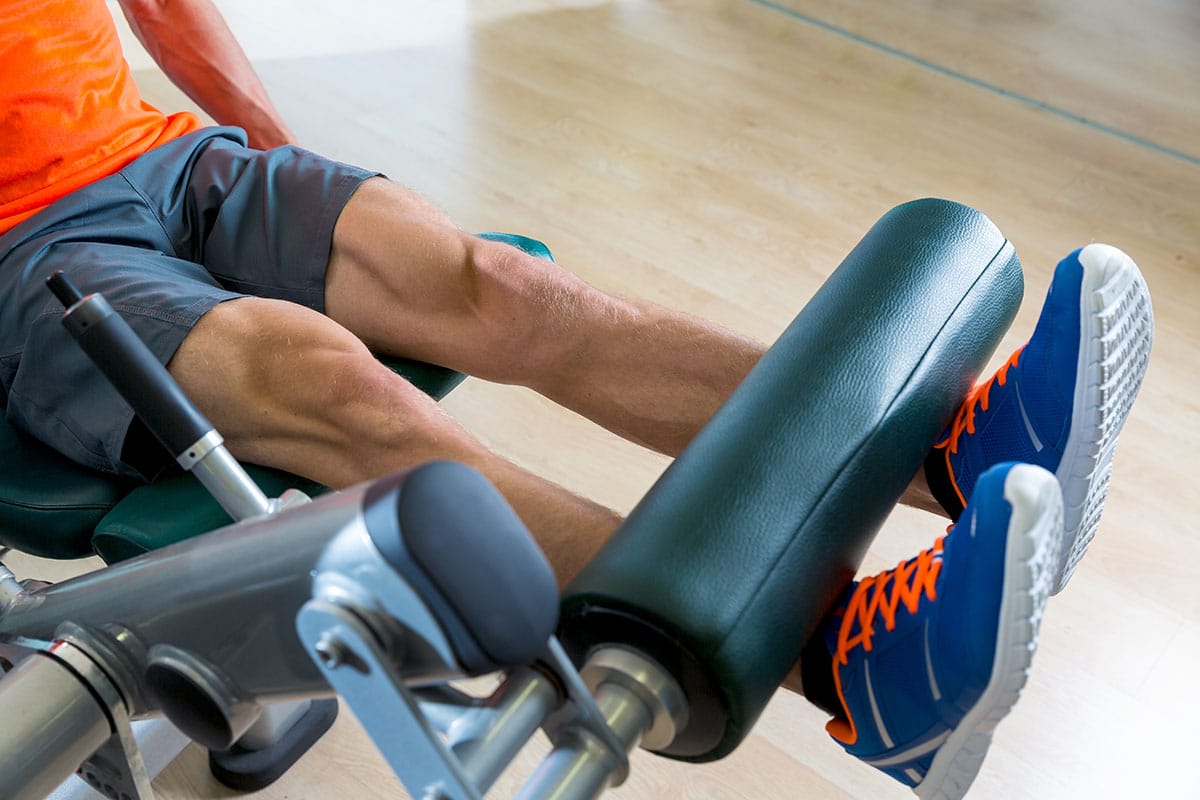
The isolated quad extension. One muscle. One plane. One direction. Repeated thousands of times. Meanwhile the glutes sleep, the fascia stiffens, the hips forget how to move. This is not training a body — it is training a machine to use a machine.
Your body is not a collection of individual muscles connected by pulleys. It is a continuous, three-dimensional tensegrity structure — an integrated network of muscles, tendons, ligaments and fascia (the connective tissue matrix that surrounds, separates and connects every structure in your body) working together as a single system. Fascia transmits force, stores elastic energy, provides proprioceptive feedback and keeps every structure correctly positioned relative to every other.
Fascia needs varied, multi-directional, unpredictable loading to stay hydrated, supple and functional. It responds to being stretched, twisted, compressed and released in multiple planes and at varying speeds. What it does not respond well to is being loaded in exactly the same direction, at exactly the same speed, through exactly the same range, three sets of twelve repetitions, twice a week, for years.
Repetitive isolated gym movement progressively thickens and adheres the fascial layers in specific areas, while leaving others chronically underloaded. The result is what you feel as stiffness that doesn't respond to stretching, restricted movement that seems to come from "nowhere," and a body that moves with less and less ease over time despite regular training. The lymphatic system — which depends almost entirely on fascial movement and varied muscular activity to circulate — becomes progressively more sluggish. Recovery slows. Inflammation lingers.
Reason 3 — Three Dimensions, One Cerebellum, Zero Machines
Here is a question the fitness industry never asks: what are muscles actually for?
Not to look impressive in a vest. Not to generate impressive numbers on a force plate. Muscles exist to move the body — to propel it through space, stabilise it against unexpected forces, absorb impact, transfer energy from the ground through the kinetic chain to the fingertips, and respond in real time to an environment that is constantly varied, unpredictable and three-dimensional.
Complex, multi-planar movement — the kind that involves coordination, balance, proprioception, rotation and unpredictability — does something that no isolation exercise can: it trains the cerebellum.
The cerebellum — the most undertrained organ in modern fitness
The cerebellum contains approximately 50% of all the neurons in the brain, despite being only 10% of its volume. It is responsible for movement coordination, balance, timing, motor learning and the refinement of all voluntary movement. It learns by being surprised — by having to respond to varied, unpredictable, three-dimensional physical challenges. Guided machine training, which eliminates all surprise and variability, gives the cerebellum almost nothing to work with. Functional outdoor training, with its constant variation, unstable surfaces and complex movement patterns, is one of the most powerful stimuli for cerebellar development available. A stronger cerebellum means better coordination, sharper reaction time, more efficient movement and a dramatically lower injury risk. And — not a minor point — training that challenges your coordination, your balance and your ability to respond to the unexpected is simply, objectively, more fun. Nobody ever left a session laughing because they did three sets of leg extensions.
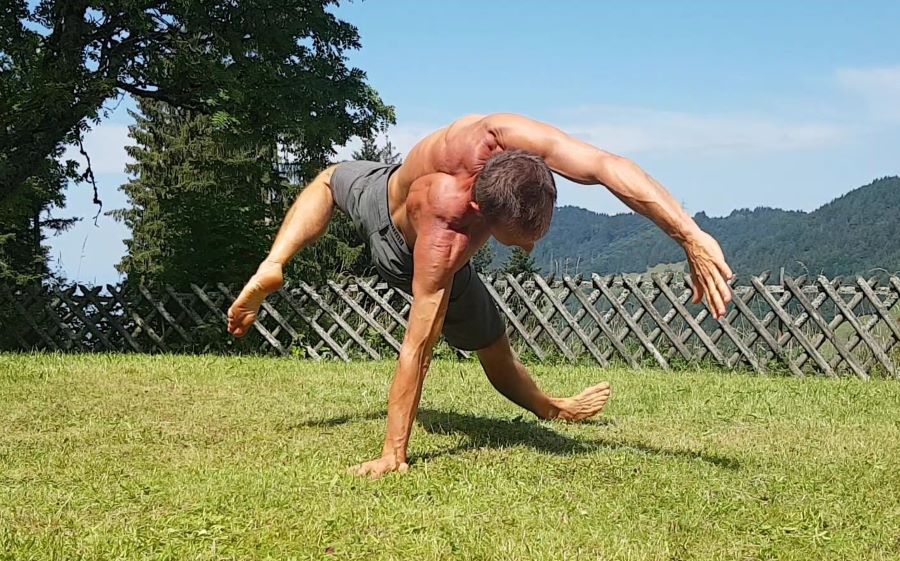
Complex, multi-planar, unpredictable movement. Every joint, every plane, every neurological pathway engaged simultaneously. The cerebellum loves this. A leg press machine gives it nothing.
This is why athletes who train exclusively on machines often move poorly the moment they step outside the gym. Their muscles are strong. Their movement system is undertrained. They can generate force — but they cannot organise it. They cannot transfer it efficiently through the kinetic chain. They cannot stabilise under load in a position they haven't rehearsed exactly. The result is an impressive isolated strength that doesn't translate to real-life performance — and breaks down the moment the movement deviates from the programmed script.
Complex functional movement — a kettlebell swing, a medicine ball throw against a wall, a TRX single-leg row, a lateral lunge with rotation, an agility ladder sequence — trains muscles, connective tissue, joints, fascia, the nervous system and the cerebellum simultaneously. It builds joint stability, freedom of movement, efficient energy transfer and functional strength that actually works in life. Not just in a machine that's already holding you in the right position.
If you train muscles for mass and strength but they can't actually work together as an integrated system — there is no harmony. It's not fitness. It's just decorated dysfunction. Unless the goal is to correct a specific isolated weakness before reintegrating it into the whole system — which is a valid and sometimes essential approach — training isolation as a primary method is simply the wrong tool.
Reason 4 — Cortisol Stacking
Picture this. It's 6:30pm. You've sat through three meetings that could have been emails, dealt with a commute that tested your faith in humanity, had four coffees and answered forty-seven messages. Your adrenal glands have been working since 7am. And now — because you're committed — you're going to the gym. Your adrenal glands have been pumping out cortisol for hours. Now you go to the gym and train hard.
Intense exercise — particularly sessions over 45 to 60 minutes, particularly late in the day — is itself a significant cortisol stimulus. Your body interprets hard training as a stressor and responds accordingly. This is normal and necessary — the stress signal triggers adaptation, the body repairs and becomes more resilient. That's the whole point.
But it only works if the training stress is the main stress of the day. Stack it on top of eight hours of work stress, a difficult commute, three strong coffees and an evening of screen time — and you're not creating adaptation. You're compounding cortisol on cortisol, asking adrenal glands that are already running on fumes to produce one more round. The body doesn't distinguish between a board presentation and a set of deadlifts. Both produce cortisol. Both demand recovery resources. When those resources are exhausted, adaptation stops and exhaustion begins.
Sound familiar? Good. Keep reading.
There's a phrase in gym culture that I find genuinely dangerous. "Push harder. Go heavier. No days off." Here's the problem with that: "Push harder. Go heavier. No days off." This is excellent advice for a professional athlete with a recovery team, eight hours of sleep and no other stressors. For a stressed, sleep-deprived professional who already lives at a sympathetic nervous system ceiling — it is the exact wrong prescription.
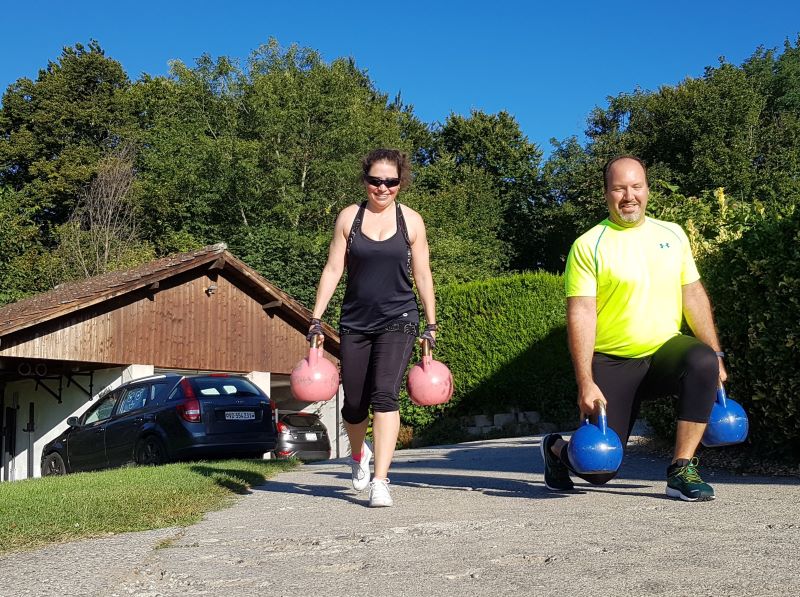
Outdoor training with the right intensity — energising, not depleting. The difference between training that builds you up and training that grinds you down is context, timing and cortisol awareness.
This is why so many people who train hard feel paradoxically worse than people who barely train at all. It's not the exercise. It's the timing, the context, and a nervous system that was already running on empty before they walked through the door. Adding a hard session to a hard day doesn't cancel out the hard day. It just makes Wednesday harder too.
Reason 5 — The Cardio Machine Problem
Don't even get me started on the cardio machines. Actually — I've started. There's no stopping me now.
The cross-trainer — or elliptical trainer — is one of the most widespread pieces of gym equipment in the world. You will find one in every commercial gym, every hotel fitness room, every well-meaning corporate wellness suite. It is also, biomechanically, one of the most problematic. The foot platform spacing forces the hips into a position of chronic abduction. The arm motion doesn't correspond to any natural human movement pattern — the arms push and pull in a plane that doesn't coordinate naturally with the legs. The spine is placed in a sustained forward lean. The movement is perfectly repetitive, perfectly predictable, perfectly unnatural. Thousands of repetitions of this pattern, session after session, can create more postural problems than it solves.
The stationary bike. The wrong seat height compresses the hip flexors repetitively. The wrong seat position creates constant friction at the lumbar spine. The fixed forward lean tightens the anterior chain further. Sustained pedalling without proper setup creates repetitive strain at the knee, hip and lower back. Arthrosis of the lumbar facet joints is a long-term gift that years of poorly set-up stationary biking can provide.
The treadmill. Slightly better — at least the movement pattern resembles walking or running. But the belt pulling back under your feet subtly alters the biomechanics compared to overground running, reducing the posterior chain engagement and training slightly different motor patterns. And the flat, perfectly uniform surface eliminates all the proprioceptive and stabilisation challenge that makes outdoor running so beneficial for joint health and movement quality.
The alternative to all three? Walk in a forest. Swim in a lake. Jog on a trail. Revolutionary, I know. Swim in the lake. Cycle on a real road with varied terrain and corners. Jog on a trail where every footfall is slightly different. The cardiovascular benefit is identical — often superior. The biomechanical benefit is incomparably better. The light, the air, the varied terrain and the sensory richness add everything the cardio machine subtracts. And it costs nothing.
Reason 6 — The Microbiome and the Social Paradox
The microbiome hit nobody talks about — including your gym
Spending time in natural environments exposes your body to an extraordinary diversity of microorganisms. Soil bacteria, plant volatiles, diverse airborne microbial populations — all of these enrich and calibrate the gut microbiome, train the immune system to be proportionate rather than reactive, and reduce baseline inflammation. 
Recycled air, chemical cleaning products, cortisol-suppressed immunity. The gym gives your immune system nothing to work with.
The gym is the opposite: recycled air, chemical cleaning products on every surface, no soil, no plants, no microbial diversity. Add the cortisol load — itself a potent suppressor of immune function — and you have an environment where your microbiome gets no enrichment and your immune system gets no training signal from nature.The social isolation paradox
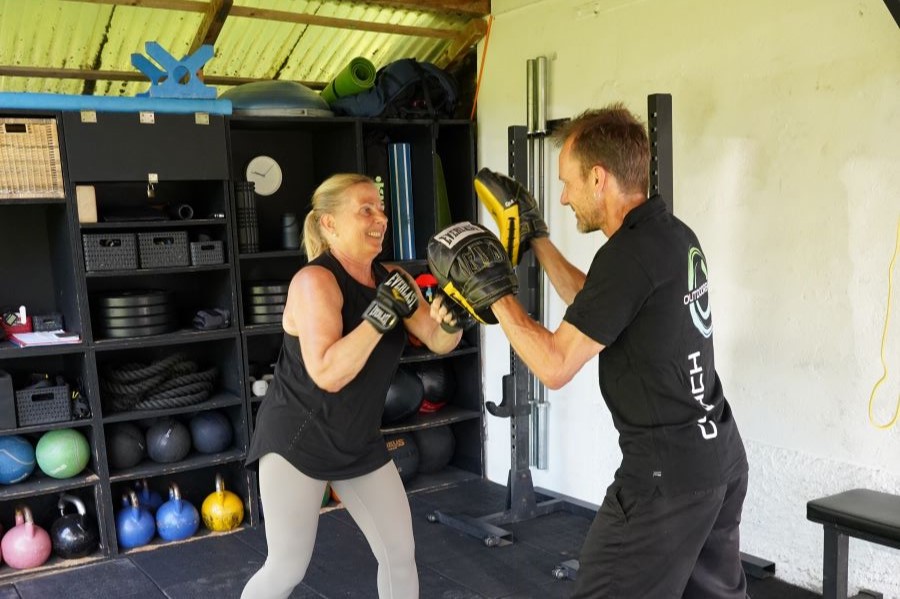
This is what the social nervous system needs from training. Challenge, laughter, interaction. Not headphones and a wall.
Humans evolved moving in social groups. Movement was inherently social, inherently playful, inherently interactive. The neurochemistry of group physical activity — oxytocin, serotonin, endorphins triggered by shared exertion, challenge, laughter and play — is profoundly different from the neurochemistry of solitary exercise.
Go to any gym and actually watch people for a few minutes — not work out, just watch. Headphones in. Eyes down or on a phone. Nobody makes eye contact. Nobody laughs. Twenty people in a room, all completely alone. It's one of the stranger things we've quietly normalised. They walk in alone. They put on headphones. They stare at a screen or a wall. They do their sets with zero eye contact, zero spontaneity, zero play, zero real interaction. Then there is the social pressure — feeling watched, judged, compared. The anxiety of not knowing how to use a machine. The uncomfortable mirror that shows you every imperfection under fluorescent lighting. For many people, the gym creates a low-grade social stress that runs through the entire session. The body is already in cortisol territory. Then it adds self-consciousness on top.
What training used to look like
For most of human history, intense physical effort happened in a group — with challenge, laughter, competition, cooperation, surprise and play all mixed in together. The session wasn't programmed on a spreadsheet. It was alive. The body and the social nervous system were engaged simultaneously. Your body doesn't just need load. It needs connection. It needs laughter. It needs to be surprised. No amount of solo treadmill sessions can replicate that — not neurochemically, not hormonally, not functionally.
If You've Hit a Plateau — Or You're Always in Pain
There's a specific person I had in mind when I wrote this section. Maybe it's you. Trained for years. Not lazy — genuinely consistent. And somehow accumulated a small collection of things that just don't go away. The neck. The shoulder. The knee that makes that noise. The lower back that's fine until it isn't. You've stretched. You've seen a physio. It helped for a week. Then it came back, like a bad houseguest who found your spare key. Sound familiar? This section is for you.
The stiff neck that never fully resolves. The shoulder that clicks and catches. The knee that flares up after certain movements. The lower back that tightens after every session and never quite releases. You've tried stretching. You've tried massage. You've been to the physiotherapist. It helps for a week and then comes back. The reason it keeps coming back is that the source of the problem — the compensation pattern, the dormant muscle, the fascial restriction, the faulty movement strategy — has never been identified and corrected.
This is exactly what a thorough biomechanical evaluation addresses. Not a generic "let's see how many push-ups you can do" assessment. A proper, systematic look at what's actually going on — joint by joint, pattern by pattern:
What a real evaluation looks like
Postural analysis — identifying structural imbalances, asymmetries and compensatory patterns that have developed over years.
Joint mobility assessment — joint by joint — finding exactly which joints are restricted, hypermobile or moving incorrectly, and in which planes.
Muscle strength and endurance testing — identifying not just weakness but the specific pattern of weakness: which muscles are dormant, which are overcompensating, and what the cascade of consequences looks like through the kinetic chain.
Core endurance assessment — not "how many crunches" but true deep core stability under varied and functional loading.
Neuromotor pattern detection — identifying faulty movement strategies and compensation patterns that have been hardwired through repetition.
Fascial assessment and targeted self-release techniques — finding areas of fascial restriction and teaching the specific release movements that progressively restore tissue quality and freedom of movement.
Biomechanical movement analysis — watching how you actually move in fundamental human patterns and identifying exactly where the system breaks down.
The result is a clear picture of where the problem actually originates — which is almost never where the pain is. Knee pain that comes from dormant glutes. Shoulder pain that comes from thoracic spine restriction and weak deep neck flexors. Lower back pain that comes from hip mobility deficits and overactive hip flexors. Neck tension that comes from breathing pattern dysfunction and a collapsed thoracic cage.
Once the source is identified, the approach is elegant rather than aggressive: correction is gently and progressively woven into the functional training itself. You're not doing remedial exercises in a corner. You're training — outdoors, with full engagement, varied and challenging — and the corrections are built into every session. Faulty patterns are replaced with correct ones. Dormant muscles are reactivated and reintegrated into the system. Fascia is progressively mobilised. The body starts to reorganise around a better blueprint. And the pain that has been there for years starts, quietly, to resolve.
What the Alternative Actually Looks Like
None of this means you should cancel your gym membership tomorrow. Used purposefully — short, intense sessions with compound free movements — the gym is a reasonable tool for specific goals. But it should be a tool, not an environment. Not a lifestyle. Not a substitute for genuine movement.
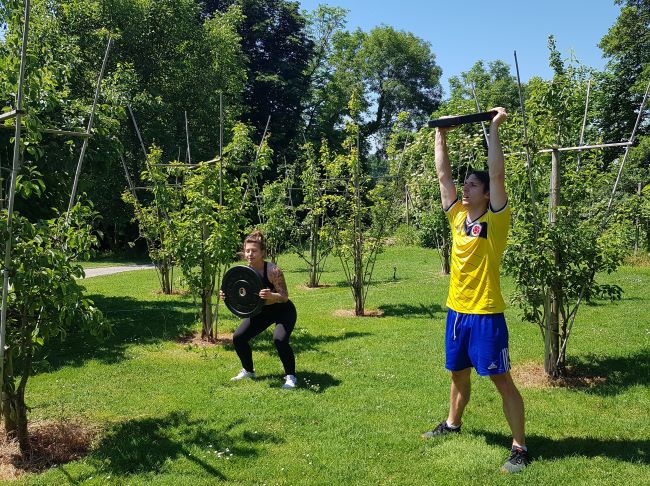
This is what training that works with your biology looks like. Outdoors. Together. With a smile. Not despite the effort — because of it.
The environment that produces the most complete biological adaptation is the one humans evolved in: outdoors, in natural light, on varied terrain, with compound multi-planar movements, in a social context, with an element of play, challenge, surprise and genuine interaction. Not every session needs to tick every box. But when you consistently replace the sealed box with the open sky, something shifts in the body that goes beyond what any fitness metric can capture.A typical outdoor session with a coach might include: a movement warm-up on varied terrain, TRX compound pulling and pushing patterns that require full-body stabilisation, kettlebell work in multiple planes, medicine ball throws that demand explosive coordination, agility and reaction drills that challenge the cerebellum, mobility flows that address the specific restrictions found in the assessment, plyometric elements adapted to current fitness level, and a cool-down that uses the natural environment — the ground, a tree, the slope of a hill — as both tool and sensory experience. Laughter is not optional. It is part of the prescription.
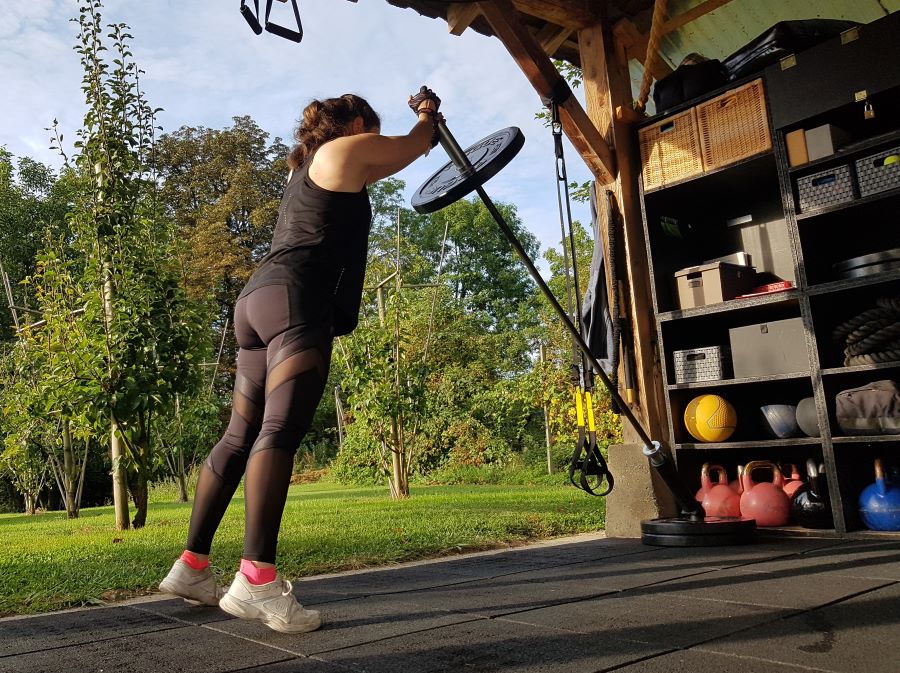
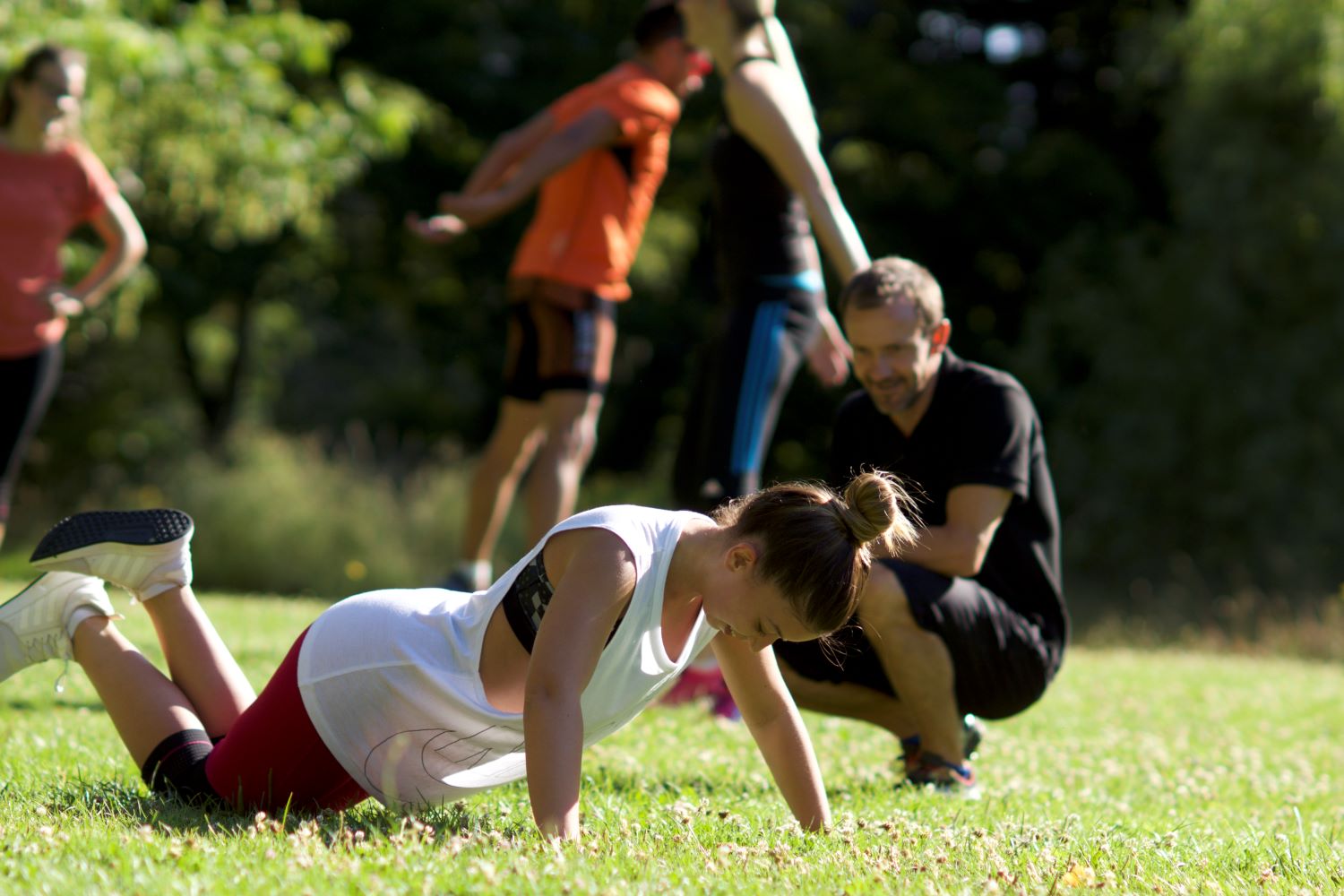
A compound movement outdoors. Three-dimensional, weight-bearing, balance-demanding. The nervous system, the cerebellum, the fascia, the joints and the muscles are all engaged simultaneously. This is what training for life looks like.
An Honest Word About What I Do
Everything above is basically my coaching philosophy, written out long. I work outside — by the lake, in gardens, on trails, on hillsides. Not because I read a study about it in 2022. Because I tried it both ways and one of them works significantly better. I use bodyweight, TRX, kettlebells, medicine balls, resistance bands, the ground itself. I keep sessions short enough that cortisol stays in the useful range and recovery is real. I use humour, challenge, interaction and play because the nervous system needs those signals too. Every session is different. The body — and the brain — need variety to keep adapting.
I've been telling clients this stuff for twenty years, long before I started finding the research that confirmed it. Whether that makes me ahead of my time or just unusually stubborn is a matter of perspective. Either way — it works. Earth contact. Sunlight. Compound movement. Real recovery. These aren't biohacking trends. They're what humans need. They've always needed them. We just built a very expensive, very well-marketed box that let us pretend otherwise.
If you've been training in a gym for years and you have a plateau that won't shift, a pain that won't resolve, or simply a growing suspicion that something about your approach is wrong — and your gym bag has been giving you the same look back for a while — come for an evaluation. Not to be told you've wasted years — you haven't. But to find out, specifically, what your body is actually asking for. Most people are surprised by how simple the answer turns out to be. And by how much better they feel once something that's actually right for them replaces something that was just conveniently there.
Your questions
Should I cancel my gym membership?
Not necessarily. The question is whether the gym is your primary movement environment or an occasional tool. If you use it for short, purposeful sessions 1-2 times a week while also training outdoors, walking daily and sleeping well — it has a place. If it's your only movement, you're training 5 days a week and feeling progressively worse — something needs to change. A good starting point: move one session per week outdoors and notice what happens within a fortnight.
What if I live somewhere with bad weather?
In Switzerland, "bad weather" is a concept that dissolves the moment you own a good jacket. When it rains, we train under cover in the outdoor studio — open air, natural light, no fluorescent tubes, no recycled air. Just shelter from the drops. The body warms up fast. Very fast, actually. The only person who occasionally feels the cold is the coach — who spends the session observing, correcting and encouraging rather than moving at full intensity. A small professional sacrifice willingly made.
I need to build muscle — don't I need the gym for that?
Progressive overload can be achieved with bodyweight, TRX, kettlebells, resistance bands, free weights and barbells — squats, deadlifts, hip thrusts — just as effectively as with machines. The studio is equipped for serious strength work. What it does not have is guided machines that fix your range of motion and do half the work for you. The research is clear: muscle growth is driven by mechanical tension and metabolic stress, not by the specific tool. Strength training is part of the programme — it just doesn't need a machine to happen. For maximal bodybuilding aesthetics, isolation machines have a role. For functional strength, athletic performance, joint health, longevity and quality of life — free, compound, multi-planar training wins every time.
I have chronic back / knee / shoulder pain. Can this approach help?
In most cases, yes — significantly. Chronic pain that persists despite conventional treatment almost always has a root cause in a compensation pattern, a dormant muscle group or a fascial restriction that hasn't been properly identified. A thorough biomechanical evaluation finds the source, not just the symptom. Correction is then woven progressively into functional training, so the problem gets solved while fitness improves simultaneously. Most clients see meaningful improvement within 4 to 12 weeks — depending on the complexity of the pattern, how long it has been there, and what they do between sessions.