If I could give you one single piece of advice — one — to transform your energy, your sleep, your mood, your hormones, your immunity and your long-term health, it would not involve food, training, supplements or any kind of programme. It would be simpler, older, and completely free.
Think about that for a moment. No product. No subscription. No expertise required. Available to every human being on the planet, every single day, completely free of charge — and yet almost nobody is actually using it.
Go outside. Into the light. Every single day. That's it. Everything that follows is the explanation of why that embarrassingly simple act might be the most profound health decision available to you right now.
We are solar beings who forgot the sun
Let me ask you something. Think honestly about your typical day. Where do you wake up? Inside. Where do you eat breakfast? Inside. Where do you spend the next eight hours working? Inside. Where do you commute, eat lunch, exercise, relax and eventually fall asleep? Mostly inside. Research confirms it — the average person in an industrialised country spends about 96% of their time indoors. And the remaining 4%? Often a quick walk to the car with sunglasses on.
Now here's the thing. Every single organism on this planet — every tree, every bee, every wolf, every bacterium under a rock — has evolved over billions of years with a deeply embedded biological relationship with the sun. Not a vague, optional relationship. A hard-wired, non-negotiable one. Light tells cells when to divide. It schedules your hormones. It activates your immune system. It determines whether your brain gets its nightly clean-up or not. Light is not background decoration. Light is instruction. And we have essentially stopped receiving it.
We replaced sunlight with LED screens, fluorescent office tubes and air-conditioned boxes. We put glass between ourselves and the sky — glass that, as you'll soon discover, filters out the very wavelengths that matter most to your biology. We started applying sunscreen the moment we stepped outside. We put sunglasses on our children. And then we wondered why depression, chronic fatigue, sleep disorders, weight gain, inflammation and autoimmune diseases climbed year after year in exactly the same decades we moved indoors.
« The average apple tree gets more meaningful sunlight exposure in a single morning than the average office worker gets in an entire week. We are growing humans in conditions we wouldn't grow a houseplant in. »
This is not about blaming anyone. It's about understanding something fundamental — and making one small, daily change that touches almost everything else.
Light is energy — and not all of it is visible
Okay, a tiny bit of science here. Don't worry — I've done my best to make it feel like a good conversation rather than a university lecture. Bear with me for two minutes, because once you understand what light actually is, everything else in this article becomes completely obvious.
Light is electromagnetic energy travelling in waves — think of it like waves on a beach, but invisible and moving at the speed of light. Different wavelengths create different effects. Short wavelengths are high energy (ultraviolet — the stuff that tans you). Long wavelengths are lower energy but penetrate deeper (infrared — the warmth you feel). A prism splits white light into a rainbow. That rainbow is the visible part of the spectrum. But sunlight contains much more than what your eyes can see.

The full electromagnetic spectrum. Sunlight sits right in the middle — UV on one side, infrared on the other. 61% of what the sun sends you is invisible. And it's that invisible portion that does some of the most important biological work.
Here's the breakdown of what's actually in sunlight: 7% ultraviolet light (invisible, high energy — the part that burns but also triggers hormones), 39% visible light (the bit your eyes detect), and 54% infrared warmth (invisible, but you can feel it on your skin). So more than half the sun's energy is the warmth you feel — and as you'll see, this is where some of the most remarkable biology happens. Inside your cells. Right now. If you're in the sun.
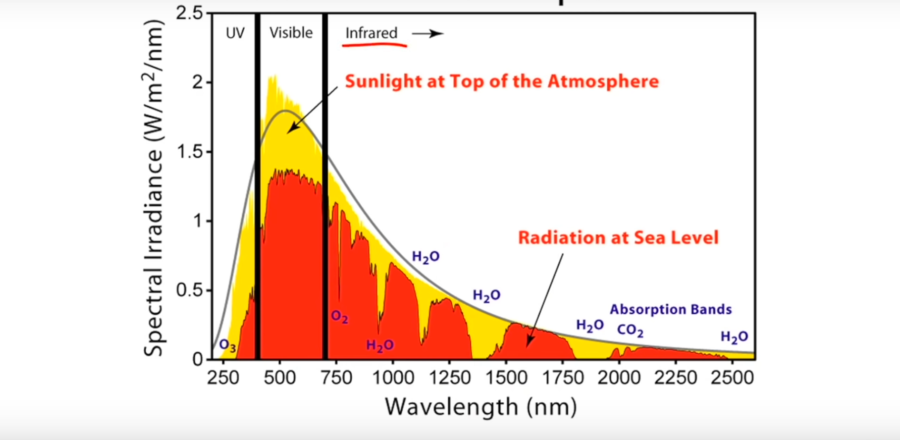
The solar radiation spectrum at sea level. See how the infrared tail stretches far to the right — that's the near-infrared light (NIR), the warmth frequencies. They dominate sunlight. They're also the ones glass and LED lights strip out completely.
What's happening inside your cells right now — the mitochondria story
(This section gets a bit science-y. I've done my best to translate everything into plain English. Stay with me — the punchline is genuinely surprising.)
Inside every single cell in your body, there are tiny structures called mitochondria. Think of them as miniature power stations — they take the food you eat and, using oxygen, convert it into energy your cells can actually use. This energy is called ATP (adenosine triphosphate). In plain English: ATP is your body's fuel. No ATP, no life. Every heartbeat, every thought, every movement runs on ATP.
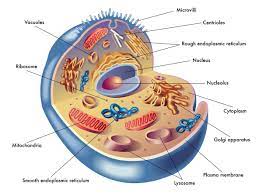
Every cell in your body contains mitochondria — those orange bean-shaped structures. They are your personal power stations. And they respond directly to light.
Now, here's where it gets interesting. When your mitochondria produce ATP, they also produce a byproduct — a kind of cellular exhaust. These byproducts are called reactive oxygen species (ROS) — also known as free radicals or oxidative stress. In small amounts, they're fine. In large amounts, they are catastrophic.
Think of it like this: imagine your mitochondria are a fireplace. A well-managed fire warms the house beautifully. But if the chimney is blocked and smoke builds up — everything starts to suffocate. Reactive oxygen species (ROS) are the smoke. And when they accumulate, here's what actually happens to you: fatigue that won't shift, brain fog, aching joints, sagging skin, low motivation, depressed mood, slow recovery after training, and over time — the chronic inflammation behind heart disease, cancer, diabetes and dementia. This is not abstract. This is your body filling up with smoke.

This is what happens to a cell when reactive oxygen species (ROS — free radicals) build up unchecked. Left: healthy cell. Middle: damaged. Right: cell death. This process, happening in millions of cells simultaneously, is what ageing and chronic disease actually looks like at the microscopic level.
Before you read on — answer this honestly
Do you wake up tired even after 7-8 hours of sleep? Do you have low-grade fatigue that coffee helps but never fully solves? Do you get sick often — or take forever to recover? Do you feel older than your age — stiff, foggy, unmotivated? Is your skin starting to sag faster than you'd like? These are not random inconveniences. They are, in many cases, the signature of mitochondria overwhelmed by reactive oxygen species (ROS). Your cellular power stations are choking on their own smoke. Keep reading.
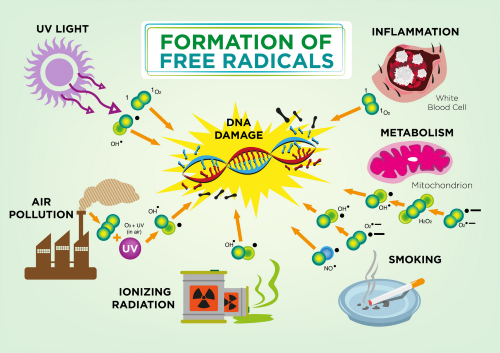
Where do these free radicals (reactive oxygen species / ROS) come from? Everywhere. Poor food, chronic stress, pollution, lack of sleep, excessive exercise without recovery, alcohol. Modern life is a free radical factory. What neutralises them is what we've stopped doing.
Your body's cleaning system — and the revelation nobody told you about melatonin
So how does your body manage the smoke? It has two systems.
The first one you've heard of: at night, your pineal gland (a pea-sized structure deep in your brain) produces melatonin. You know it as the "sleep hormone." But here's what the supplement industry doesn't mention: melatonin is also the most powerful antioxidant your body makes — twice as effective as vitamin E at neutralising free radicals (reactive oxygen species / ROS). This is a major reason why sleep is so biologically essential. It's not just rest. It's active cellular repair. Your body literally cleans house while you sleep.
Now. Ready for the thing that changes everything?
That night-time pineal melatonin? It represents approximately 5% of the melatonin inside your mitochondria. Five percent. The other 95% is made somewhere completely different — and most people have never heard of this.
The day system — 95% of your melatonin is made by sunlight
Inside your mitochondria, there is an enzyme called cytochrome C oxidase (CCO). It plays a key role in producing ATP. But it has a second, remarkable function: when it's stimulated by a specific wavelength of light — near-infrared light (NIR), which is the invisible warmth component of sunlight — it produces melatonin directly inside the mitochondria, right at the source of the reactive oxygen species (ROS).
Not melatonin that enters your blood. Not melatonin that makes you sleepy. Melatonin that is produced and used up immediately, right where the fire is burning, neutralising the smoke before it spreads. It's like having a self-cleaning oven. Except instead of the oven, it's every single one of your 37 trillion cells. And instead of a cleaning cycle, it runs on sunlight.
The science — published in Physiology (American Physiological Society)
Research established that 95% of the melatonin inside your cells is produced within the mitochondria via near-infrared light (NIR) stimulating cytochrome C oxidase (CCO) — not by the pineal gland. This intracellular melatonin is used immediately to neutralise reactive oxygen species (ROS / free radicals). It never enters your bloodstream. It doesn't make you sleepy. It is simply your primary cellular antioxidant system — and it only functions when near-infrared light (NIR) is present.
And near-infrared light (NIR)? It's the warmth you feel when the sun is on your skin. That gentle heat on your forearms at a café terrace. That golden warmth on your face during a walk. Your mitochondria are absorbing it, activating their cleaning system, and keeping your cells running clean. How much of that have you been getting lately?
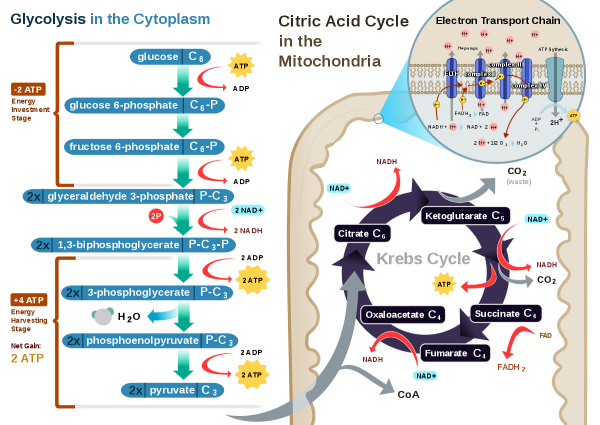
The Krebs cycle — the ATP production process inside your mitochondria. Cytochrome C oxidase (CCO) is part of the electron transport chain shown in the top right. When near-infrared light (NIR) hits it, it triggers melatonin production that neutralises reactive oxygen species (ROS). Sunlight is literally running your cellular cleaning programme.
Near-infrared light (NIR) goes deeper than you think
Here's something that genuinely blew my mind when I first learned it. Near-infrared light (NIR — wavelengths between 760 and 1400 nanometres, if you want the detail) doesn't just warm your skin. It penetrates through your skin, through your muscle, through your fat, through your bones — between 1 and 8 centimetres deep, depending on the wavelength. It can enter your skull and travel through the fluid that surrounds your brain (called cerebrospinal fluid — the liquid cushioning your brain and spinal cord) to reach the brain tissue itself.
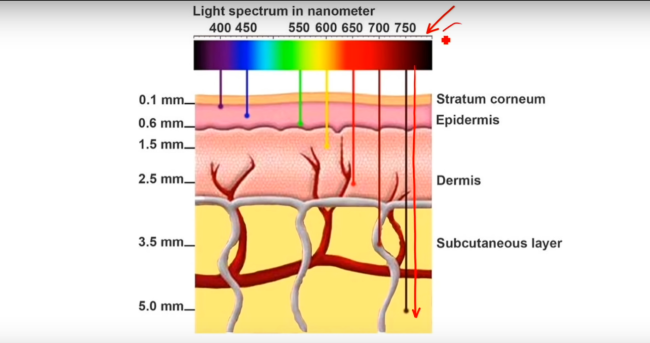
This is the penetration map. Blue and green light barely get past the skin surface. Red and near-infrared light (NIR) go all the way through the dermis and into the subcutaneous layer — where your blood vessels, nerves and deep muscle tissue are. The warmth you feel is this happening in real time.
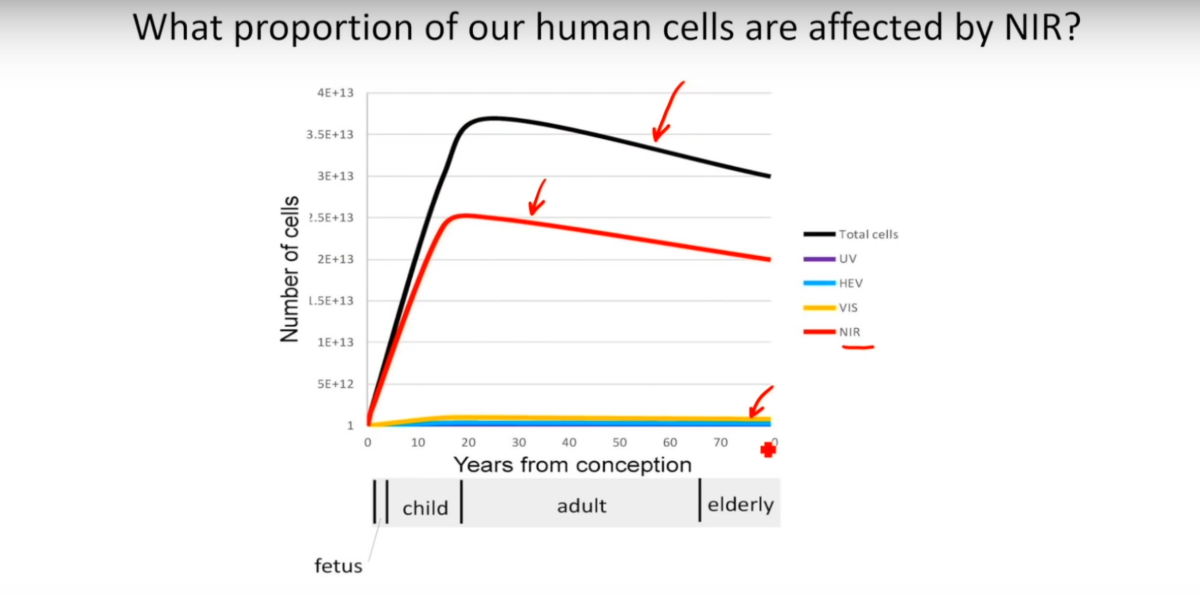
What proportion of your cells does near-infrared light (NIR) actually reach? The red line is the answer — and it's the dominant one. As you age and spend more time indoors, that red line falls. Fewer cells being cleaned. Less mitochondrial melatonin produced. More free radicals accumulating unchecked. This is ageing, in a chart.
And here's something almost poetic: everything green and blue in nature — leaves, grass, moss, water — reflects near-infrared light (NIR) at over 90%. A forest isn't just pleasant. It's a near-infrared (NIR) amplifier, bouncing healing wavelengths at you from every direction, hitting tissues you didn't even know could be reached. This is part of why a walk in the woods feels so physically different from a walk in a city. It's not just the fresh air. It's the light itself — and what it's doing in your cells.
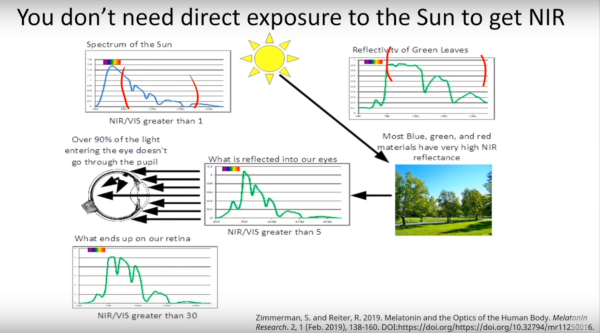
You don't even need to be in direct sun. Green leaves reflect near-infrared light (NIR) at over 90% — bouncing it at you from every direction. Most blue, green and red natural materials do the same. In a forest you're being bathed in reflected near-infrared (NIR) from every tree, every leaf, every blade of grass. You don't need direct sun exposure to get the NIR benefit. You just need to be outside, in nature.
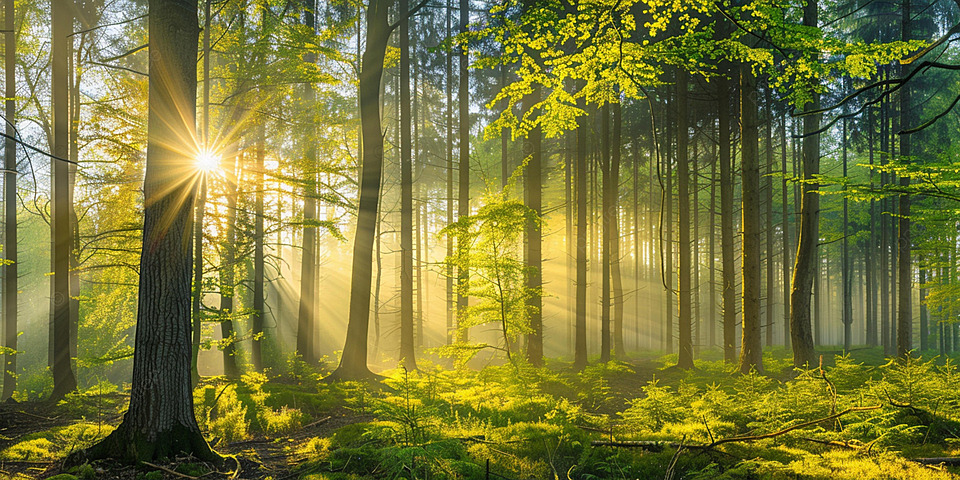
A forest is a near-infrared (NIR) bath from every direction. The trees, the leaves, the grass — all reflecting healing wavelengths onto your skin and into your cells. Your ancestors spent every day in this. You can recreate it on your lunch break.
Your master clock — how light runs your entire biology
Alright, imagine your body is the most complex orchestra ever assembled. Hundreds of thousands of musicians — your digestive system, immune system, hormonal system, sleep system, repair system, metabolic system. Each one playing its own part on its own schedule. Now imagine this orchestra without a conductor. Pure chaos, right?
The conductor exists. It lives in your brain and it's called the suprachiasmatic nucleus (SCN) — a tiny cluster of about 20,000 neurons in your hypothalamus (a region at the base of your brain that controls basic functions). Its job: synchronise every biological process in your body to the 24-hour cycle of the planet. When you sleep, when your hormones peak, when your immune system deploys, when your cells divide, when your gut gets moving — all of it, timed precisely, like a perfect performance. Every night.
And what synchronises this master conductor? Light. Specifically, light hitting a special type of cell in the back of your eye — cells called intrinsically photosensitive retinal ganglion cells (ipRGCs). These cells are not for seeing. Their only job is to measure the ambient light level and report it to your suprachiasmatic nucleus (SCN): morning, afternoon, or night. They are your body's sunrise detector.
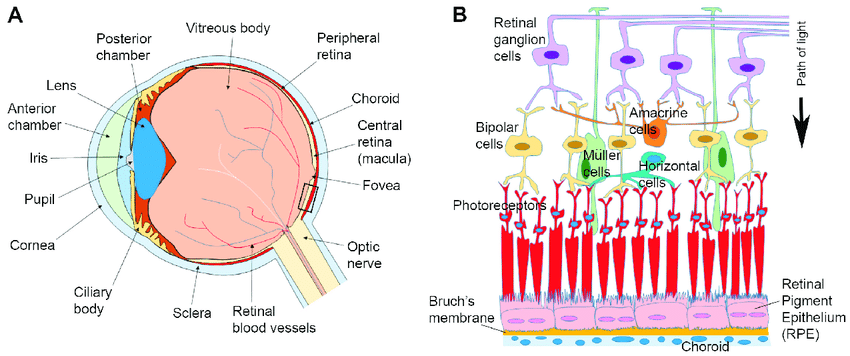
Your eye contains two systems: the one that helps you see, and the one that tells your master clock what time it is. Those specialised ganglion cells (ipRGCs) in the lower part of your retina do only one job — measure the light and report to your body clock. They're the reason morning sunlight is so fundamentally important.
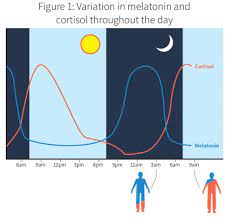
Cortisol and melatonin — like two dancers on a perfectly timed seesaw. When cortisol is high, melatonin is low (daytime, active, alert). When cortisol drops, melatonin rises (evening, winding down, repair). Morning light triggers the cortisol rise. Evening darkness schedules the melatonin rise. Mess with the light — the whole dance falls apart.
Morning light — the single most important habit in this article
Here's how it works. When bright natural light hits your intrinsically photosensitive retinal ganglion cells (ipRGCs) in the morning, they fire a signal to your suprachiasmatic nucleus (SCN): it is daytime. The SCN immediately triggers a cortisol spike — not the stress kind, but the healthy morning kind that wakes you up, sharpens your thinking, kickstarts your metabolism and tells your whole body it's time to be alive. This cortisol peaks around 9-10am and then gradually declines through the day.
About 12-14 hours after that morning cortisol peak, the suprachiasmatic nucleus (SCN) schedules the start of melatonin release from your pineal gland. Your body begins to cool down, slow down, and prepare for sleep. If morning cortisol peaked at 8am — melatonin release starts around 9-10pm. Perfect.
Now. What happens if you miss the morning signal? You wake up in a dark bedroom. You check your phone under the covers. You have breakfast under dim kitchen lights. You commute with tinted windows or sunglasses. Your intrinsically photosensitive retinal ganglion cells (ipRGCs) never receive the morning signal. Your suprachiasmatic nucleus (SCN) never fires the cortisol anchor. Cortisol peaks late — maybe 11am or noon. Melatonin gets scheduled 12-14 hours later — midnight or 1am. You lie in bed at 11pm feeling wired. You eventually fall asleep at midnight. You wake at 7am still exhausted. You reach for coffee. Sound familiar? This is not a willpower problem. It's a light problem.
Be honest — when did you last do this?
When did you last go outside, without sunglasses, within 30 minutes of waking up — not on a balcony behind glass, not in a car, but actually outside with your face to the open sky — for at least 10-15 minutes? If you can't remember... your suprachiasmatic nucleus (SCN) can't remember either. And your entire biological timing system is currently running on a very bad guess.
The lux reality — why your office is lying to you about light
Here's something that surprises almost everyone. Your eyes are brilliant at adapting to different light environments. Walk from a bright garden into a dim room and within minutes it looks perfectly normal. This adaptation is so good that people genuinely believe their office is "well-lit." They are off by a factor of 100.
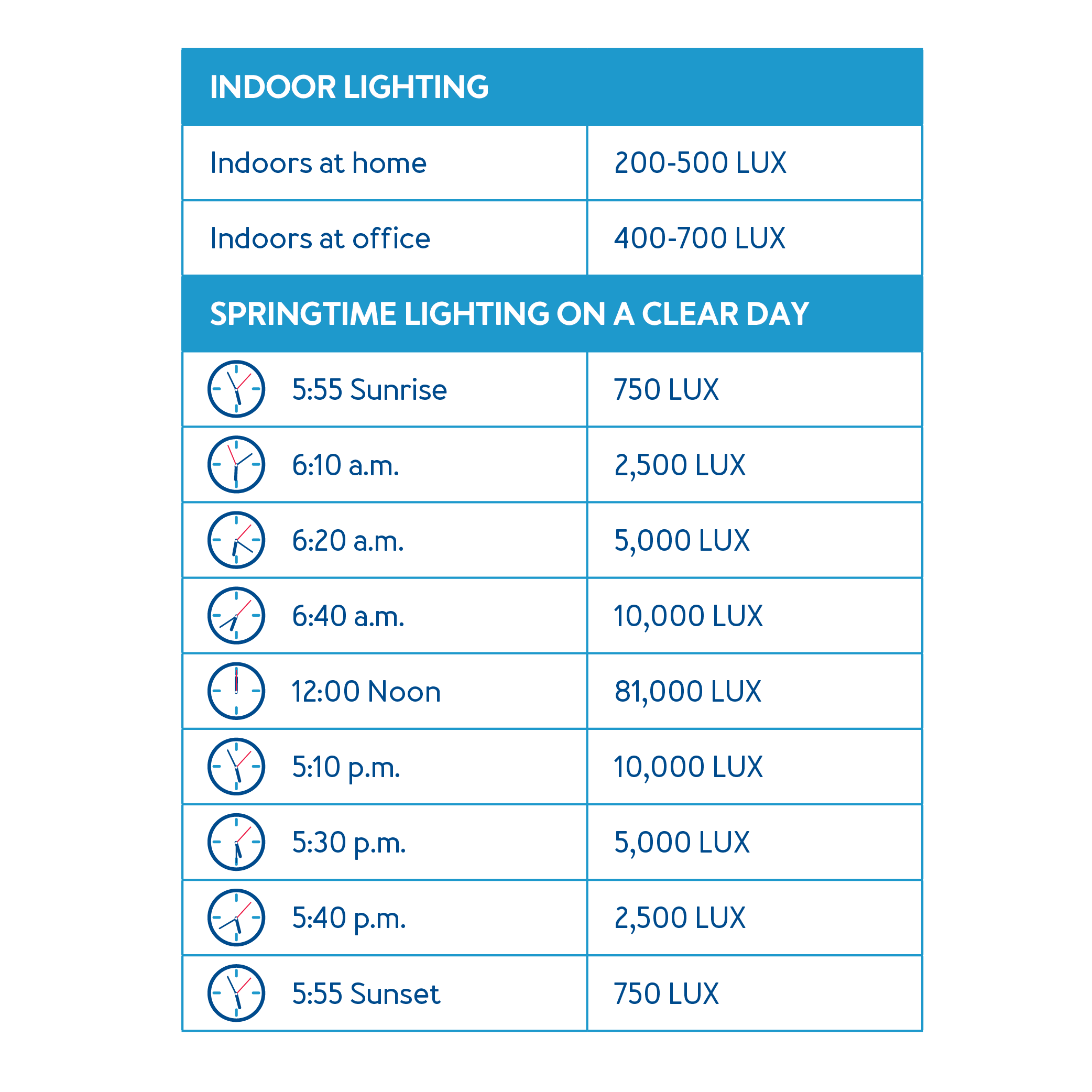
Look at the gap between "indoors at the office" (400-700 lux) and "outside at noon" (81,000 lux). Your eyes adapt and make the office feel bright. Your suprachiasmatic nucleus (SCN) is not fooled. It knows it's receiving a tiny fraction of the biological signal it needs. That's why the afternoon slump is real — and why it's not about lunch.
Light intensity is measured in lux. A well-lit office: 500 lux. An overcast outdoor day: 1,000 lux. A sunny spring morning outdoors: 10,000-25,000 lux. Direct midday sun: 80,000-130,000 lux. Your intrinsically photosensitive retinal ganglion cells (ipRGCs) need at least 1,000 lux to receive a proper circadian signal. Your office provides less than a tenth of that. Your eyes compensate. Your biology doesn't.
And a window? Glass filters out near-infrared light (NIR) and UV — the biologically active wavelengths. Getting your morning light through a window requires 7 to 50 times longer exposure to produce the same effect as being outside. Modern energy-efficient "low-E glass" (the kind that doesn't let warmth through) filters out almost all of the near-infrared light (NIR). You are literally behind a biological filter and don't know it.
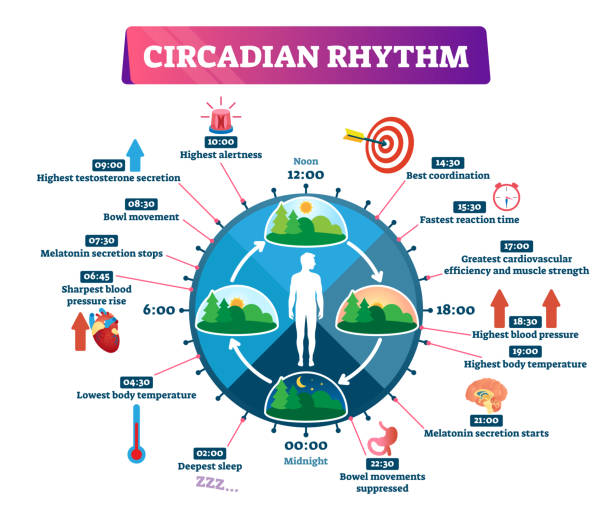
Your circadian rhythm is not just about sleep. It governs testosterone, coordination, cardiovascular efficiency, gut motility, immune function and body temperature — all precisely scheduled across 24 hours. Morning light is what keeps this clock on time. Miss it and everything below shifts.
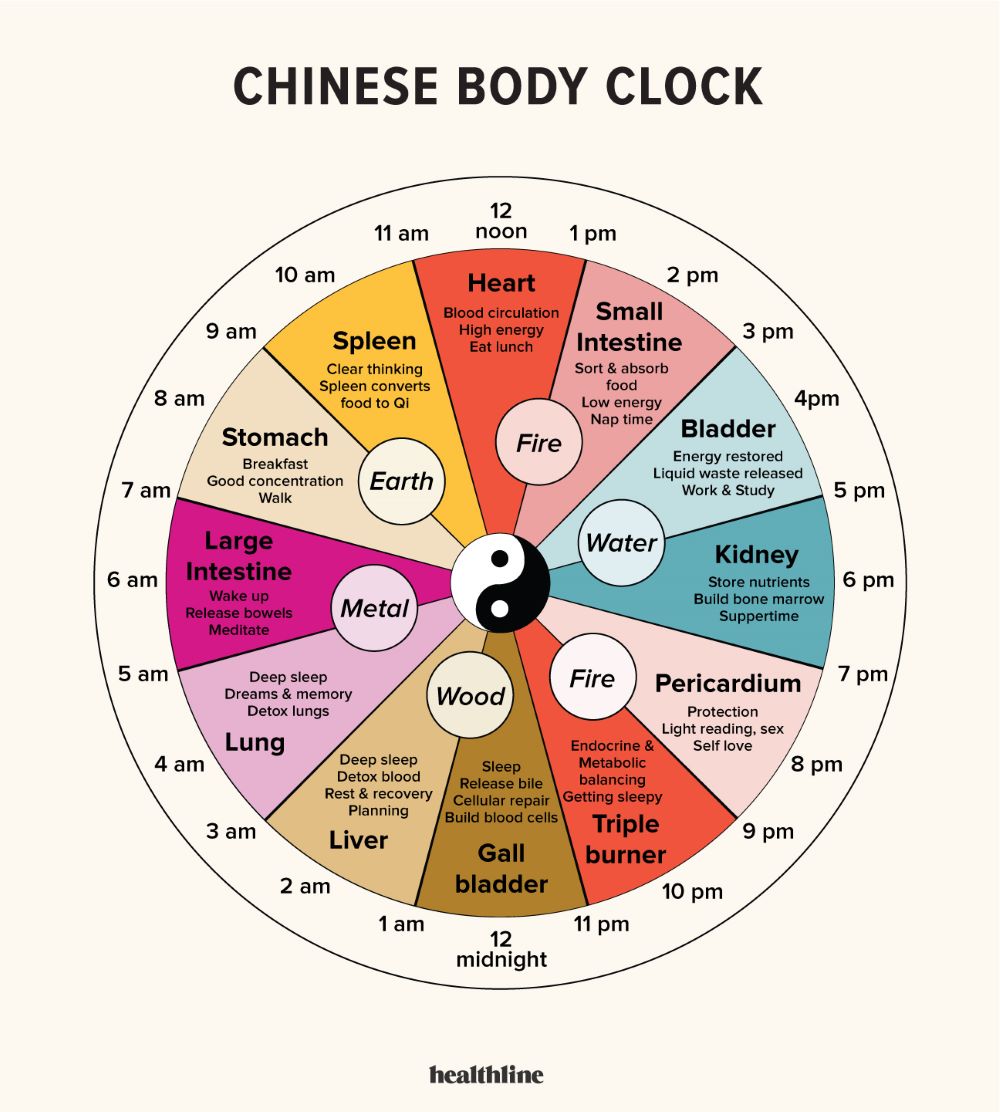
Every event on this clock — from the sharpest rise in blood pressure at 6:45am to testosterone peaking at 9am to melatonin starting at 21:00 to deepest sleep at 2am — is choreographed by your suprachiasmatic nucleus (SCN). And your SCN is calibrated by light. Remove the signal and the orchestra keeps playing — just increasingly out of time.
Why do you love campfires so much? (And why sunrises stop you in your tracks)
Let's take a little detour — because this is one of my favourite bits. Have you ever noticed that there's something about a campfire that is almost impossibly soothing? You sit around it and something in you just... settles. The conversation slows down. The shoulders drop. The face softens. You feel, without knowing why, completely at home.
And sunrises. You don't even need to be a "morning person" to feel it. Something about that slow orange wash across the sky stops you. You might have been in a rush — but you pause. You just look. And for a moment, everything is right with the world.
This is not sentimentality. This is your nervous system recognising the light it was built for.
Here's the biology behind the feeling. Those specialised cells in your eyes — the intrinsically photosensitive retinal ganglion cells (ipRGCs) — are concentrated in the lower part of your retina. Which means they respond most to light coming from above your visual field. Light from the sky. Light from high sources.
But they are also active in the upper part of your retina, which responds to light coming from below — like a campfire, a candle, or a sunset low on the horizon. Here's the critical difference: light from below, in the warm orange-red wavelengths, carries a completely different message. Instead of "it's daytime, stay alert," it says "the day is ending, begin to wind down, you are safe, it is almost time to rest." Your nervous system shifts from sympathetic (alert, stress-ready) to parasympathetic (calm, repair, digest). That feeling of peace by a campfire? That's your biology recognising the signal it has received every evening for a million years. You're not just being romantic. You're being biologically correct.
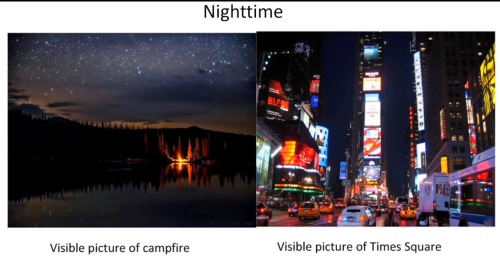
Same planet. Same time of night. Completely different message to your suprachiasmatic nucleus (SCN). Left: campfire — warm, low, reddish-orange, below the eye line. Your body clock reads: night, safety, wind down, prepare for sleep. Right: Times Square — bright, blue-white, overhead. Your body clock reads: daytime, stay alert, suppress melatonin. Only one of these was available to humans for 99.9% of our evolutionary history. Guess which one.
Sunrises and sunsets produce predominantly red and near-infrared light (NIR) — long wavelengths, low angle, warm. Your mitochondria love them. Your nervous system recognises them. Your body understands at a cellular level that this light is ancient and safe and right. The reason sunrises and sunsets are beautiful to you — genuinely, not just aesthetically — is because your biology has been shaped over millions of years to respond to them with relief. Ah. There it is. The beginning and end of another day of being alive.
Evening light — the quiet catastrophe most people don't see coming
Now flip the scenario. It's 9:30pm. Dinner's done, kids are in bed or maybe you're still at the office. You settle into the sofa. Phone in one hand, Netflix in the background, laptop possibly open. Every screen pointing at your face. Every screen emitting light in exactly the wavelength range — around 460-484 nanometres, the blue end of the visible spectrum — that most powerfully activates those intrinsically photosensitive retinal ganglion cells (ipRGCs) in your eyes.
The message arriving at your suprachiasmatic nucleus (SCN)? It is the middle of the day. Do not release melatonin. Keep cortisol up. Stay alert.
Your body complies. Melatonin onset gets pushed back 90 minutes or more. You finally put the phone down at midnight, lie in bed, and spend an hour unable to sleep because your biology was just told it was 3pm. The next morning you're exhausted. You need coffee to function. The cortisol anchor is delayed again. Melatonin will be late again tomorrow night. And so it goes.
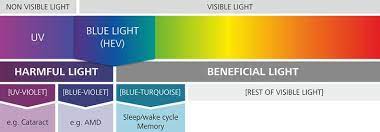
Not all light is the same in the evening. The blue spectrum (460-484nm) is the most potent circadian disruptor — it tells your body clock it's daytime. The warm end of the visible spectrum, and everything below it (orange, red, near-infrared/NIR, fire) has far less disruptive effect. This is why sunset colours don't keep you awake.
The research — one night of modest indoor light during sleep
A study measuring the effects of light exposure during sleep found that just one night at 100 lux (roughly the level of a modest bedside lamp) compared to near-darkness produced measurable increases in heart rate, decreases in heart rate variability (the measure of how well your heart adapts to stress), and increased insulin resistance (meaning your body became temporarily less efficient at managing blood sugar) the following morning. These are cardiovascular and metabolic consequences — from a single bedside lamp. One night.
The 10pm-4am danger window
Bright light between 10pm and 4am is one of the most potent suppressors of mood-elevating brain chemicals available. The pathways producing dopamine (motivation, reward, pleasure) and serotonin (wellbeing, contentment, emotional stability) are actively downregulated by bright light at night. If you regularly feel flat, low or anxious — and you regularly have bright lights or screens on in the late evening — this single change will likely produce noticeable improvements in mood within a week. Not metaphorically. Neurochemically. Your brain literally makes less of the good stuff when it's exposed to bright light at night.
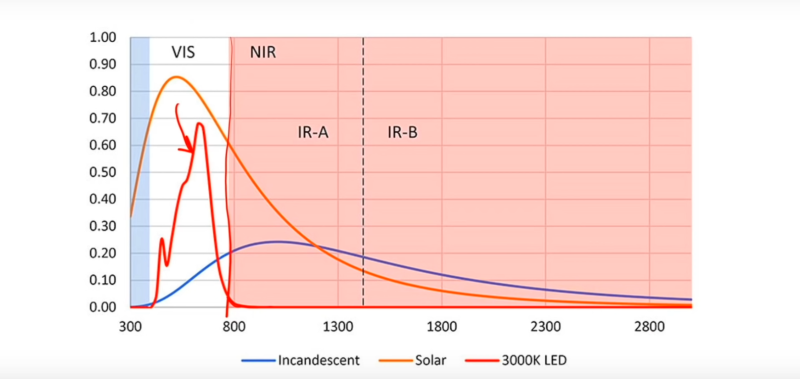
Three light sources compared. Orange: solar — rich in near-infrared light (NIR) across the whole spectrum. Blue: incandescent (old-style bulbs) — modest NIR. Red: 3000K LED (the "warm white" ones in your home) — visible light only, near-infrared (NIR) essentially zero. Your mitochondria's cleaning system requires near-infrared light (NIR). Under modern LED lighting, it's running on empty. This graph is why your office is biologically darker than it looks.
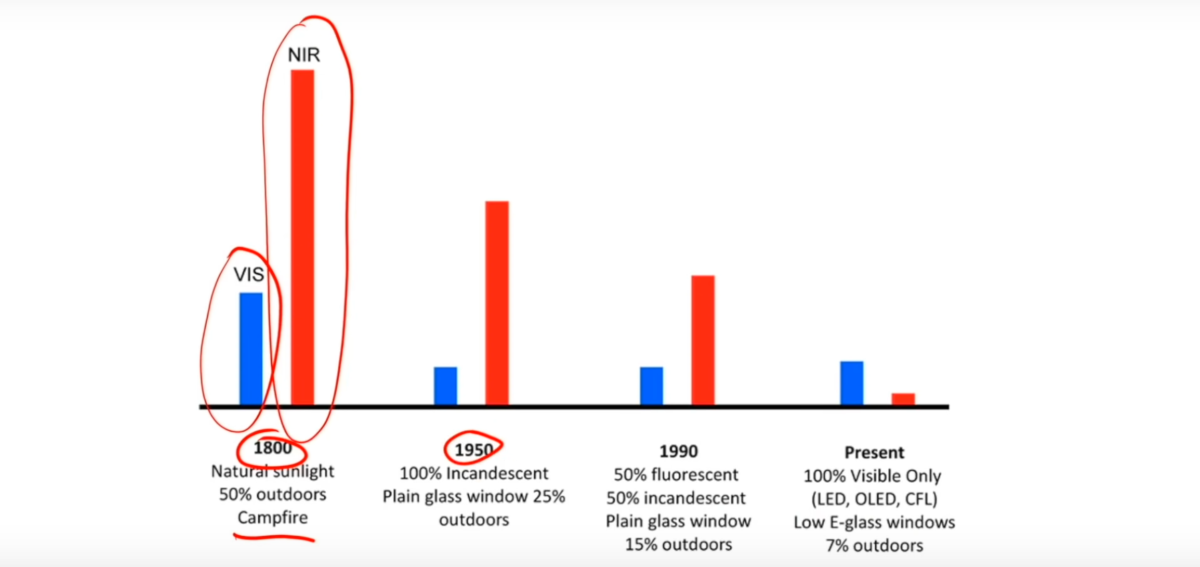
The near-infrared light (NIR) collapse over 200 years. In 1800: sunlight, campfire, 50% outdoors — near-infrared (NIR) exposure was enormous. By 1950: incandescent bulbs and 25% outdoors — still some NIR. By 1990: fluorescent lighting, plain glass windows, 15% outdoors — declining fast. Today: LED everywhere, low-E windows, 7% outdoors — the red bar (NIR) is almost flat. Nobody made a decision to remove near-infrared light (NIR) from human life. It just happened, incrementally, in the name of progress.
UVB — the hormone factory hiding in plain sight
Most people have been taught to think of UVB light — the short, high-energy ultraviolet wavelengths — as purely the dangerous, skin-burning component of sunlight. The thing to protect yourself from. The thing sunscreen blocks. And yes, excessive UVB causes sunburn, which can cause DNA damage (damage to the instruction manual inside your cells), which can contribute to skin cancer. That's real.
But UVB also does things that the sunscreen industry doesn't put on the bottle. Things that are, frankly, astonishing.
UVB and your sex hormones — yes, really
A 2021 peer-reviewed study found that UVB exposure to skin cells triggers a cascade that increases testosterone and oestrogen levels — in both men and women — increases the activity of the reproductive system, heightens mood and romantic drive, and improves fertility markers. Not in small, marginal ways. In measurably significant ways, visible within a handful of sessions.
How? UVB hitting skin cells activates a protein called p53 (a kind of cellular quality-control manager), which triggers the production of sex hormones directly from the skin. Yes — your skin is a hormone-producing organ. It always was. We just covered it up and wondered why our libido, energy and mood seemed to go seasonally flat.
The sunscreen timing question
Sunscreen blocks UVB. UVB triggers the skin-to-brain hormonal cascade. Studies show women exposed to UVB reported increased romantic drive and physical vitality after just 2-3 sessions. Men showed increased testosterone and motivation. None of this means "never use sunscreen" — it means thinking about when. Twenty to thirty minutes of skin exposure first, at midday, 2-3 times per week. Then protect if you'll be out much longer. The goal is adequate UVB, not zero UVB.
UVB and pain tolerance — why summer hurts less
Here's a strange fact: people are measurably better at tolerating pain in summer than in winter. Not because they're in better shape. Because UVB light triggers the release of beta-endorphins — your body's own natural painkiller, the same molecule behind "runner's high" — and activates a pain-suppressing region deep in your brain (the periaqueductal grey area, or PAG — a region that releases natural painkillers throughout your nervous system). Summer is literally less painful. Light is a biological painkiller. No prescription required.
UVB and your immune system — why summer colds are rarer
You probably think you get fewer colds in summer because people are outside more and viruses spread less. That's part of it. But there's a deeper mechanism. UVB light hitting specialised cells in your eyes triggers the spleen (your immune system's rapid-response reserve — a fist-sized organ near your stomach that stores immune cells ready to deploy) to release white blood cells into circulation, proactively ready to fight infection.
In summer, you're not encountering fewer pathogens. You're better armed when you do. In winter, with short days and indoor living, this immune activation pathway goes quiet. Fewer immune cells in circulation. More time spent indoors in proximity to others. It's a double vulnerability — more exposure, less readiness. "Flu season" is not caused by the cold. It's caused by the absence of light. The cold just gets blamed because it's visible.
Red light and near-infrared light (NIR) — the healing frequencies your ancestors lived in
Red light (wavelengths 620-700 nanometres — the deep red you see at sunrise and sunset) and near-infrared light (NIR, wavelengths 760-1400 nanometres — the warmth you feel) are the wavelengths most associated with the ancient light environments humans evolved in. Fire. Sunrise. Sunset. The golden hour. They're also the wavelengths with the most documented therapeutic effects at the cellular level. The research field is called photobiomodulation (PBMT) — literally "light-induced biological modification" — and it's one of the fastest-growing areas of medical research.
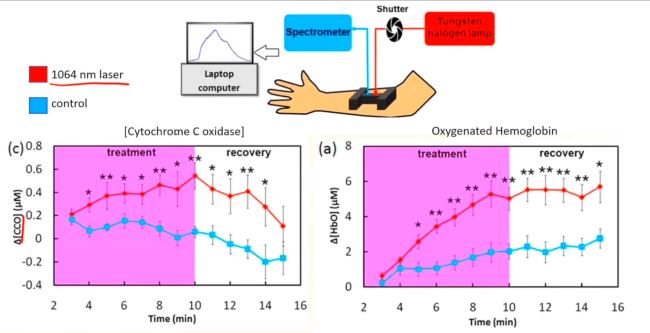
The mechanism in action. Red line: near-infrared light (NIR) treatment. Blue line: control. Left chart: cytochrome C oxidase (CCO) — the enzyme in your mitochondria that produces melatonin when hit by near-infrared light (NIR) — measurably increases. Right chart: oxygenated blood flow increases simultaneously. This is not theory. This is the cleaning system switching on. Published in Nature Scientific Reports, 2016.
Red light and your eyesight — reversing ageing in your retina
This one stopped me when I first read it. Professor Glen Jeffery at University College London found that just 3 minutes per day of exposure to 670nm red light (deep red, like a sunset) for two weeks produced a 22% improvement in visual acuity — the sharpness of vision — in subjects over 40. Not in young people. In people whose vision had already begun to decline.
The mechanism: the rods and cones in your retina (the photoreceptor cells that actually detect light and send signals to your brain so you can see) are the most metabolically demanding cells in your entire body. They consume enormous amounts of ATP. As they age, reactive oxygen species (ROS — free radicals) accumulate, mitochondria decline, and vision deteriorates. Red light stimulates cytochrome C oxidase (CCO) in these cells — increases ATP (energy), reduces reactive oxygen species (ROS), and measurably reverses the decline. In 14 days. With a red light for 3 minutes each morning. I'll give you a moment to process that.
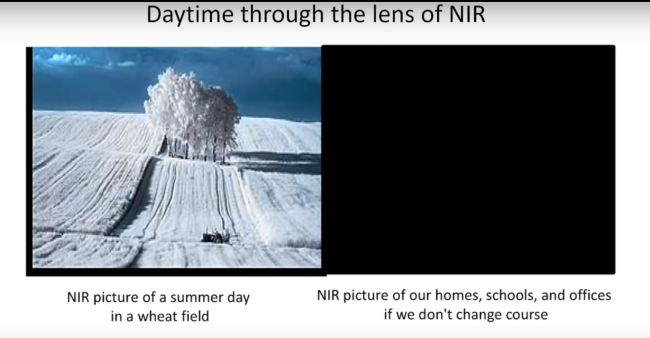
This is what daytime looks like through a near-infrared (NIR) camera. Left: a summer day outdoors — glowing white with near-infrared light (NIR). Right: our homes, schools and offices — pitch black. Zero. This is the environment your mitochondria currently live in for 96% of their existence. And this is what changed in one century of industrialisation.
Vitamin D — the marker they confused for the mechanism
We need to have a short, important conversation about vitamin D — because it has become the single lens through which most people understand sunlight, and it's giving a very incomplete picture.
Here's what's true: vitamin D levels in the blood correlate strongly with health. Low vitamin D is associated with higher rates of heart disease, cancer, depression, autoimmune disease and early death. So the logical conclusion seemed to be: take vitamin D supplements and get the benefits. Elegant. Convenient. Sellable.
Here's the problem: vitamin D supplementation trials keep being disappointing. The major VITAL trial gave 25,000+ adults 2,000 IU of vitamin D daily for five years. No significant reduction in heart attacks. No significant reduction in stroke. No significant reduction in cancer incidence. The benefits of being in sunlight are not replicated by the supplement.
Why? Because vitamin D is not the mechanism. It's a marker. When researchers find low vitamin D in sick people, they're actually finding evidence that those people don't spend time in sunlight. And sunlight does approximately twenty other biologically important things simultaneously — near-infrared light (NIR) production, circadian rhythm anchoring, nitric oxide release (which dilates blood vessels and protects the cardiovascular system), sex hormone stimulation, endorphin release, immune activation via the spleen, and the mitochondrial cleaning system we just discussed. Vitamin D is one note. Sunlight is the whole orchestra.
It's like squeezing an orange into a glass, giving someone only the juice, and wondering why they don't get the benefits of eating a whole orange. The vitamin C is in there. The fibre, the flavonoids, the water, the act of eating it — are not.
Sun avoidance is dangerous — the data they buried
In 2014, a study appeared in the Journal of Internal Medicine that should have changed everything. It didn't get nearly the attention it deserved. But it should have.
Swedish researchers followed nearly 30,000 women for 20 years, tracking sun habits alongside every known health variable. The finding: all-cause mortality approximately doubled in women who avoided the sun compared to those with the highest sun exposure. Dose-dependent — the more sun, the lower the mortality. And the effect persisted after adjusting for every other variable.
Swedish cohort study — Journal of Internal Medicine, 2014
"Non-exposure to sunlight was associated with a risk of death similar to smoking." The researchers estimated that avoiding the sun had a mortality impact comparable to smoking a pack of cigarettes a day. The largest reduction in deaths in sun-exposed women came from cardiovascular disease. Melanoma rates were slightly higher in the sun-exposed group — but total cancer mortality was not significantly different, because the cancers most associated with sun avoidance (colon, breast, blood, prostate) outweighed the melanoma risk.
This doesn't mean deliberately burning yourself is fine. Sunburns — the blistering, DNA-damaging kind — should be avoided. But the public health advice that has been given for decades — avoid the sun completely, apply high-SPF sunscreen every time you go outside, keep children in the shade — may be causing vastly more harm than it prevents. The numbers, when you actually look at them, point that way clearly.
The practical protocol — what to actually do tomorrow morning
Enough theory. Here's the action. Three time windows. All free. All simple. All immediately available.

This. Every morning. That's the protocol. Everything else is detail.
Morning — the non-negotiable anchor
Outside within 30-60 minutes of waking
- Go outside. Not onto a balcony behind glass. Outside. Face towards the open sky (not directly at the sun — you don't need to stare at it). Within 30-60 minutes of waking. This is the single highest-leverage health habit you can build.
- No sunglasses. The light needs to reach your intrinsically photosensitive retinal ganglion cells (ipRGCs). Sunglasses block it. Squint on bright days — but don't shield completely.
- No window. Glass filters near-infrared light (NIR) and UV — the active wavelengths — by 50-90%. Looking outside through a window is not the same as being outside.
- 10-30 minutes minimum. Bright sunny day: 5-10 minutes. Overcast winter morning: 20-30 minutes. Your eyes adapt to everything — but your suprachiasmatic nucleus (SCN) needs the full signal.
- No phone for the first 30 minutes. Give your cortisol anchor time to set before the stress inputs arrive. Your notifications will wait.
Daytime — near-infrared light (NIR) and UVB
Feel the warmth — 2-3 times per week
- Feel the warmth on your skin. Any time you feel the sun's warmth, near-infrared light (NIR) is penetrating your tissues and running your mitochondrial cleaning programme. That warmth is not incidental — it's the medicine.
- UVB window: 10am-2pm, 2-3 times per week. Short sleeves or shorts, no sunscreen for 20-30 minutes. Build up gradually — the goal is zero burns, not zero tan.
- Choose green over concrete. A park, garden, forest — any green space reflects near-infrared light (NIR) at 90%+ from every direction. A concrete courtyard reflects almost none. Given a choice: always choose green.
- Take off your shoes. Earth contact plus near-infrared light (NIR) exposure plus movement outdoors is the most complete natural health protocol available. Your ancestors did this daily. Your lunch break is long enough.
- Morning red light for your eyes. Within 2-3 hours of waking, look towards (not at) a warm reddish-orange light for 2-3 minutes. Sunrise gazing — when safe — is the original version. This stimulates cytochrome C oxidase (CCO) in your retinal cells and protects your long-term vision.

Sunset viewing — 10-15 minutes of warm, low-angle light at the end of the day. This tells your suprachiasmatic nucleus (SCN) that night is beginning and schedules melatonin onset correctly. It's a biological transition ritual built into the planet's daily cycle. You can participate every evening for free.
Evening — protecting the melatonin window
Low, dim, warm — after sunset
- Watch the sunset if you can. 10-15 minutes of low, warm, reddish light at the end of the day tells your suprachiasmatic nucleus (SCN) that night is beginning. This is your melatonin scheduling signal. No supplement required.
- Go low and warm after dark. Floor lamps over ceiling lights. Warm orange bulbs over cool white LEDs. Candles. Reduce overhead lighting dramatically after 8-9pm. Your nervous system will feel the difference almost immediately.
- Screens away 1-2 hours before bed. If truly unavoidable: minimum brightness, maximum distance, deep red filter — not just "night shift." Never in bed.
- Complete darkness for sleep. Even 3 lux of ambient light (a charging indicator, a street lamp through thin curtains) during sleep measurably disrupts glucose metabolism and heart rate variability. Blackout curtains or eye mask. The deep sleep quality improvement is significant and fast.
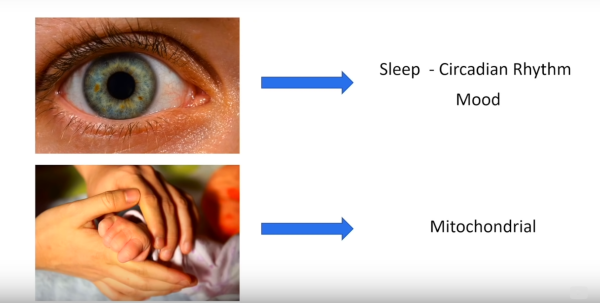
Two pathways. Two completely different systems. Light through your eyes → your suprachiasmatic nucleus (SCN) → circadian rhythm, sleep quality, mood. Light through your skin → your mitochondria → energy production, cellular repair, free radical (reactive oxygen species / ROS) neutralisation. Both pathways need real outdoor light. Neither works properly behind glass, under LEDs, or with sunglasses on as a daily default.
Your grandmother knew all of this
None of this is actually new information in the deepest sense. Humans have known about the power of sunlight for as long as they've been human. The first Nobel Prize in medicine, awarded in 1903, went to Niels Finsen — for phototherapy, using light to treat disease. Tuberculosis hospitals in the early 20th century had sun decks on the roofs specifically for patient exposure. Traditional medicine systems across every culture incorporated sunlight as a therapeutic tool. The ancients were not stupid. They were paying attention to something real.
We somehow managed to package this wisdom into supplements and "light therapy devices" while simultaneously moving our entire civilisation indoors and blanketing our evenings in blue-spectrum light. And then we spent billions trying to understand why chronic disease, depression, metabolic dysfunction and sleep disorders kept climbing. The answer was there the whole time, overhead, rising and setting every single day.

This feeling is not just psychological. It's biochemical — endorphins, serotonin, testosterone, dopamine, near-infrared (NIR) mitochondrial melatonin, immune activation, circadian anchoring. All of it, simultaneously, for free. Every day. You just have to be outside for it.
The good news — and there is genuinely good news here — is that the fix requires no equipment, no subscription and no money. It requires going outside in the morning. Feeling the warmth on your skin during the day. Dimming the lights in the evening. Sleeping in darkness. Treating the sun as the ally it has always been — while being smart about not burning.
We are nature. We didn't always remember that. But we can start again tomorrow morning. The sun will be there.
The sun has been medicine for as long as life has existed on this planet. We just forgot to take our daily dose.
— Patrik · iMove-Fit.chYour questions — answered
I live in Switzerland — grey skies for months. Does any of this apply to me?
Absolutely — go outside anyway. An overcast winter sky in Switzerland still provides 1,000+ lux — far more than any indoor space. You won't get UVB (it doesn't penetrate the atmosphere at low sun angles), but you'll still get the circadian rhythm signal from the brightness and near-infrared light (NIR) from any warmth you feel. For the UVB benefits in winter: a 10,000 lux therapy lamp is a reasonable addition, not a replacement. And follow your instinct to have dimmer, warmer, cosier evenings in winter — that instinct is biologically correct.
What about skin cancer — isn't sun exposure genuinely dangerous?
Sunburns are dangerous. Blistering, peeling burns that damage DNA (the instruction code in your cells) should be prevented. But moderate, non-burning sun exposure is a fundamentally different thing. The Swedish 30,000-women study found that sun avoiders had double the all-cause mortality. Cardiovascular disease kills vastly more people per year than all skin cancers combined. Protect yourself from burning. Stop protecting yourself from sunlight.
Should I throw away my sunglasses?
Keep them for genuinely high-intensity situations: skiing, sailing, driving into a low sun. What to stop doing is wearing them as a default every time you're outside. The light reaching your intrinsically photosensitive retinal ganglion cells (ipRGCs) through your eyes is essential for your circadian rhythm, mood, immune function and hormonal balance. Habitual daytime sunglasses suppress all of these signals. Save them for protection. Not as a default.
Can I get the benefits of red light therapy at home?
Yes — red light panels (photobiomodulation devices) are widely available and the research behind them is solid. For vision health: a red LED torch or bulb at comfortable distance for 2-3 minutes each morning is the protocol used in the UCL study. For full-body benefits, near-infrared (NIR) panels are effective. But — and this matters — they supplement sunlight, they do not replace it. Sunlight delivers UV, near-infrared (NIR) and visible light simultaneously with full spectral complexity. A red light device is one frequency. Useful. Not equivalent.
What's the single most important change I can make today?
Tomorrow morning, within 30-60 minutes of waking, go outside without sunglasses for at least 10-15 minutes. Face the sky. Leave your phone inside for those first 30 minutes. That's it. Do this every day for two weeks and notice what changes — in your sleep onset, your morning energy, your afternoon focus, your evening mood. The suprachiasmatic nucleus (SCN) recalibrates relatively quickly. The body is forgiving, and remarkably responsive, when you give it what it actually needs.